
How to Create a Game With Meaningful Player Choices
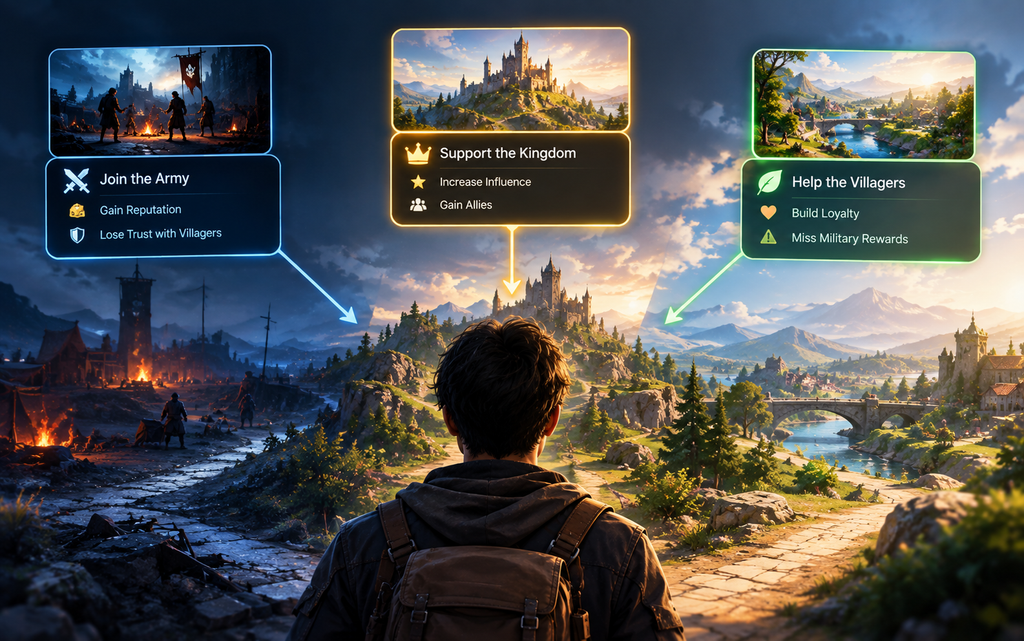
Player choice is one of the most overused phrases in game design, and also one of the most misunderstood. Plenty of games technically offer choices, a dialogue option here, a branching path there, without any of it actually mattering to the player’s experience. A choice that doesn’t change anything isn’t really a choice at all, it’s decoration. Creating a game where player decisions genuinely matter takes a different kind of design thinking than simply adding options to a menu.
Getting this right is one of the clearest ways to make a game feel memorable rather than forgettable. Players remember the moments where their decisions had real weight, even years later, far more than they remember games that offered the illusion of choice without any actual consequence behind it.
What Makes a Choice Meaningful
The Difference Between an Option and a Choice
An option is simply a fork in a menu. A meaningful choice requires the player to give something up in exchange for something else, and it needs to lead to a noticeably different outcome depending on what they picked. If every path eventually leads to the same place with only cosmetic differences along the way, players eventually stop taking the decision seriously.
Consequences Need to Be Felt, Not Just Stated
A choice feels meaningful when its consequences show up somewhere the player actually notices, whether that’s a resource they no longer have access to, a character reacting differently to them, or a section of the game that plays out differently because of an earlier decision. A consequence buried in a stat sheet or a hidden variable doesn’t register the same way as one the player directly experiences.
Common Traps When Designing Choice
The Illusion of Choice
One of the most common mistakes is designing branching paths that all converge back to the same outcome. Players are often more perceptive about this than designers expect, and once they notice a game’s choices don’t actually change anything, they stop engaging with future decisions as anything more than flavor text.
Punishing Choice Instead of Differentiating It
Some games make one path clearly better than the others, which technically creates different outcomes but discourages players from exploring the weaker options at all. A well-designed choice system makes different paths feel distinct and valid rather than making one obviously correct and the rest a mistake.
Overloading Players With Trivial Decisions
Not every decision needs to be a major branching moment. Filling a game with constant, low-stakes choices can dilute the weight of the ones that actually matter, training players to stop paying close attention to decisions altogether.
Designing Systems That Support Real Choice
Build Consequences Into the Core Systems, Not on Top of Them
Meaningful choice tends to work best when it’s woven into the mechanics themselves rather than bolted on as a separate narrative layer. A resource management system where spending one thing means going without another naturally creates weight, without needing an elaborate story to justify it.
Let Players See the Shape of a Trade-Off
Players engage more seriously with a decision when they can reasonably anticipate what they’re gaining and losing, even if the exact outcome is uncertain. Choices that feel completely random, with no sense of what’s at stake, tend to feel arbitrary rather than meaningful.
Test Whether Players Actually Remember Their Choices Later
A useful way to evaluate whether a choice system is working is to see if players can recall, later in the game or after finishing it, which decisions they made and why. If players can’t remember making a choice at all, it likely didn’t carry enough weight to register.
Prototyping Choice-Driven Mechanics Quickly
Choice systems are notoriously difficult to get right on paper, because their real impact only becomes clear once a player is actually making the decision in context. This makes fast prototyping especially valuable for this kind of design work.
Why Iteration Matters More for Choice Systems
A branching mechanic that looks balanced in a design document can feel completely different once a real player is weighing the options under actual gameplay pressure. Testing different versions of a choice system quickly is often the only reliable way to know whether the trade-offs feel fair and meaningful.
A Faster Way to Test These Systems
Astrocade makes it easier to create a game built around this kind of iterative testing, letting a designer describe a choice mechanic, get it into a playable state quickly, and adjust it based on how it actually feels once players are making real decisions rather than reading about hypothetical ones.
An Example Worth Looking At
Fly for Brainrots shows how a game can be built around a clear, focused decision loop rather than a sprawling branching narrative. Even in games with a lighter tone, the core loop of weighing one option against another is what keeps players engaged and coming back to see how different decisions play out.
What Creators Should Prioritize First
Start With the Trade-Off, Not the Narrative
It’s easier to design meaningful choice by starting with a mechanical trade-off and building narrative or theming around it afterward, rather than starting with a story and trying to bolt decision points onto it later. The trade-off is what actually creates the feeling of a real choice.
Keep the Number of Major Choices Small
A handful of well-designed, high-stakes decisions tend to leave a stronger impression than dozens of minor ones. Focusing effort on fewer, more meaningful choice points usually produces a more memorable experience than spreading that effort thin.
Playtest Specifically for Decision Weight
When testing a game, it’s worth directly asking players whether they felt like their choices mattered, rather than only observing whether they completed the game. Player reflection on this point often reveals whether a choice system is actually landing the way it was intended to.
Final Thoughts
A game built around meaningful player choices doesn’t need branching paths on the scale of a massive narrative epic to succeed, it needs decisions that carry real trade-offs and consequences players can actually feel. Getting that right takes deliberate design and a willingness to test choice systems in practice rather than just on paper, but it’s one of the most reliable ways to make a game people remember long after they’ve finished playing it.